

A thermal-component application previously published by Xbright

THERMAL & LIQUID COOLING

From flow-path parts to liquid-cooling modules

Precision manufacturing supports cold plates, manifolds, tubing, and module assembly—with a clear boundary between completed checks and customer-defined qualification.

Cold plateCold plates and flow paths
ManifoldDistribution interfaces
ModuleTubing and module integration

HIGH-CONDUCTIVITY ALUMINUM

High-conductivity aluminum and thermal module integration

AI edge computing places high-speed processing in a limited enclosure, creating concentrated heat around processors, power components, and nearby electronics. High-conductivity aluminum allows a die-cast structural part to serve as both a heat path and a module base, helping spread heat toward the enclosure, fins, or another thermal interface.

Standard ADC12Approximately 96 W/m·K
High-conductivity aluminumGreater than 180 W/m·K

The values provide a material-level comparison. Actual conductivity depends on alloy grade, die-casting process, part geometry, and test conditions.

High-conductivity aluminum die casting

High-conductivity aluminum has a narrower casting window. Tool design, mold temperature, spray, vacuum, and forming parameters require coordinated control. Xbright can assess tooling, die casting, CNC, and downstream module assembly within one program.
AI edge computing and high-power electronics

Representative uses include AI edge-computing boxes, networking equipment, industrial computers, and other high-heat-density electronic systems. Thermal bases, functional enclosures, and fin structures can be planned around heat-source location, space, and assembly conditions.

Alloy selection, thermal targets, geometry, joining method, and validation conditions are confirmed for each program.

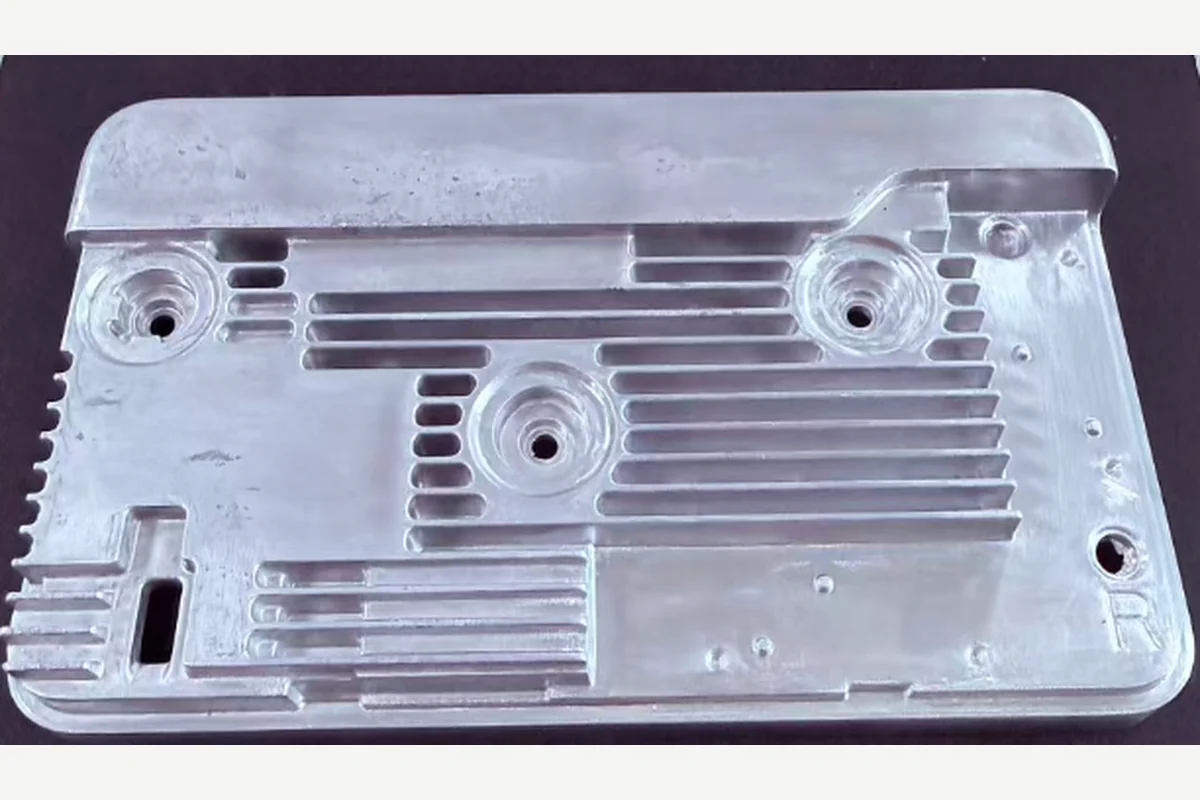
Complete high-conductivity aluminum die-cast thermal base
High-conductivity aluminum die-cast thermal base
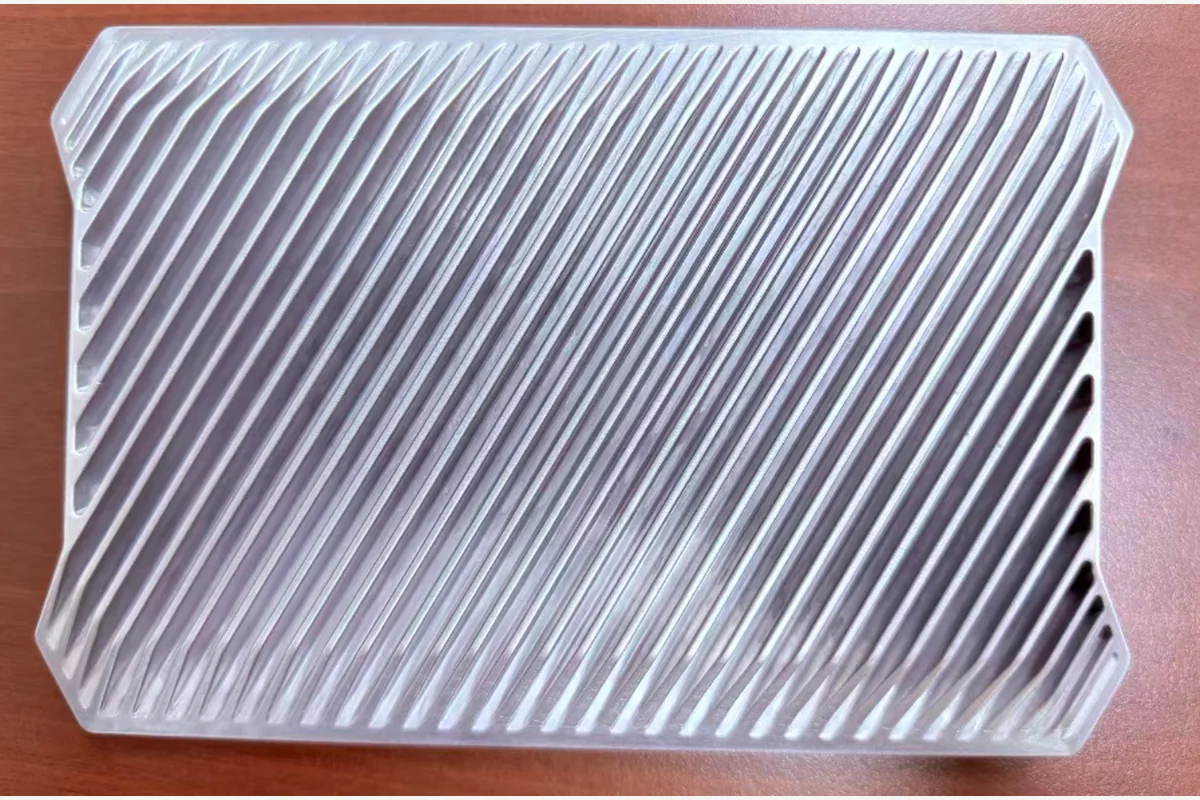
Complete high-conductivity aluminum finned thermal part
High-conductivity aluminum finned thermal part

Cold plates and flow-path parts

We assess manufacturability against the heat source, system envelope, material, sealing interfaces, and machining needs. Flow-path detail and performance targets remain program-specific.

Manifolds, hoses, and fittings

System space, routing, fitting preference, assembly sequence, and service needs define manifold and connection interfaces plus clear supply and assembly responsibilities.

IN PRODUCTION

XT-TC009-G Nano Radiative Heat-Dissipation Coating

Designed for aluminum, copper, stainless steel, and other metal heat-dissipation parts, the coating supports improved surface thermal radiation and heat exchange. Product records list an emissivity of 0.95 and test evidence covering RoHS, adhesion, salt spray, and thermal shock. A related radiative heat-dissipation structure is covered by Taiwan Utility Model Patent M607749. Actual thermal performance depends on the substrate, geometry, power, environment, and coating conditions.

View details

Completed validation

Air-leak and hydro-pressure checks

The completed scope that can be stated publicly is air-leak and hydro-pressure checking. Conditions, fixtures, acceptance limits, and records are confirmed in program documents.

Program-defined validation

Thermal, hydraulic, and reliability qualification

Thermal performance, flow, pressure drop, flow balance, and reliability are not presented as universally completed capabilities. They are planned to customer specifications and sample stage.

XT-TC009-G / TECHNICAL EVIDENCE

Nano Radiative Coating: Technical Details

This section brings together the product presentation, two sample reports from National Tsing Hua University's Advanced Cooling Laboratory, and the radiative heat-dissipation structure patent certificate. Results apply only to the samples and conditions stated in each document.

NTHU ACL Sample Comparison

Both reports are dated March 25, 2020. They cover an XT-701 (AL1070 aluminum plate) sample and an XT-701 (AL1070 aluminum plate) sample with XT-TC009-G.

Reported sampleSample thicknessReported KspReported ΔT
XT-701 (AL1070 aluminum plate)0.41 mm213.686 W/m·K15.7°C
XT-701 (AL1070 aluminum plate) + XT-TC009-G0.49 mm402.337 W/m·K5.9°C

Ksp is the reported value for each whole sample, not the intrinsic thermal conductivity of the coating. Sample thickness and measured parameters differ. ΔT is reported at L=3 cm and P=10 W; these readings do not establish a universal improvement for other products.

Application Tests in the Product Presentation

These are source-temperature differences for coated versus uncoated samples under the presentation's particular device, power, and ambient conditions, not a general performance guarantee.

Graphics-card thermal module

11.5°C lower

40 W heat source, 30°C chamber, coating on both sides

0.2 mm mobile-phone frame

8.4°C lower

5 W heat source, 30°C chamber, coating on both sides

AL6063 extruded heat sink

11.2°C lower

2 W heat source, 30°C chamber, coating on one side

EAP die-cast base

8.8°C lower

18 W heat source, 30°C chamber, coating on one side

Reliability Checks Listed in the Presentation

The presentation records PASS results for 24-hour salt spray (1 part), 3M610 tape adhesion (25 parts), cross-cut adhesion (5 parts), and a -30°C to 70°C temperature cycle for 15 hours (25 parts). Acceptance criteria remain program-specific.

Related Structure Patent

Taiwan Utility Model Patent Certificate M607749 names a radiative heat-dissipation structure and lists 潢填科技股份有限公司 as the right holder. The certificate states a term from February 11, 2021 to November 8, 2030. This repeats the certificate; current legal status has not been independently checked.

Original Documents

Complete source files are retained for internal review. Confirm confidentiality terms and permission before public release.

  • XT-TC009-G product introduction (19 pages)PDF · 19
    Open file
  • NTHU ACL: XT-701 (AL1070 aluminum plate) baseline report (9 pages)PDF · 9
    Open file
  • NTHU ACL: XT-701 (AL1070 aluminum plate) with XT-TC009-G report (9 pages)PDF · 9
    Open file
  • Radiative structure patent certificate M607749 (1 page)PDF · 1
    Open file

XBRIGHT TECHNOLOGY

Start with a non-confidential project brief

Contact & RFQ